





Find your V-taper ratio, see how close you are to the next level, and find out how standard shirts will actually fit your build.
How to measure
Arms relaxed by your sides. Wrap the tape around the widest point of your shoulders, across the outer delts, keeping it level all the way round. Don't flex or lift your chest.How to measure
Measure at navel height, which is where a shirt sits and drapes. Breathe out normally, don't suck in, and keep the tape snug but not pinching. Use the same point every time.How to measure
Around the fullest part of your chest, under the armpits and across the nipples. Tape level, arms down, normal breath.Tip
Barefoot, back against a wall. 5'10" = 70 in, 6'0" = 72 in.Results update as you type. Take each measurement twice and use the average. A 1 cm error on your waist moves your ratio by around 0.02.
Will off-the-rack shirts fit you?
Your chest to waist drop is the gap between your chest and waist measurements. Shirts are cut with a fixed drop, so if yours is bigger than the shirt's, the extra shows up as loose fabric around your waist.
Waist health check
Track your progress
Save today's numbers and re-measure every 4 weeks, same time of day, same tape. Saved privately in this browser only.
This calculator is designed around male proportions. Shoulder to waist ratio describes shape, not health or fitness. Ratio bands are aesthetic guides, not clinical standards.
Free Shoulder to Waist Ratio Calculator, No Sign Up
Free to use. No account, no email. Enter your measurements and get your results instantly. Your data stays on your device.
What is shoulder to waist ratio?
It’s your shoulder circumference divided by your waist circumference. A 48 in shoulder and a 32 in waist gives 48 ÷ 32 = 1.50. The higher the number, the stronger your V-taper. It’s often called the Adonis Index, and 1.618 (the golden ratio) is the number most people chase.
What the bands mean
| Ratio | Band | What it looks like |
|---|---|---|
| Under 1.20 | Straight | Shoulders and waist close in width. Little visible taper. |
| 1.20 to 1.34 | Average | Where most untrained men sit. |
| 1.35 to 1.44 | Athletic | A visible taper. Typical of regular gym-goers. |
| 1.45 to 1.59 | V-Taper | Clear V shape. Standard shirts start to struggle here. |
| 1.60 and above | Adonis | At or near the golden ratio. Rare without years of training. |
Shoulder to Waist Ratio Calculator Male
The calculator above is set up for male proportions. Men carry more width across the delts and upper back, so the bands and targets are higher than the female equivalents. Here’s what each common result means in real measurements.
1.3 shoulder to waist ratio
A 1.3 puts you in the average band. With a 32" waist, that’s 41.6" shoulders. Your shoulders are noticeably wider than your waist, but there’s no strong V yet. This is where most men start, trained or not. Off-the-rack slim fit shirts will usually fit you well at this ratio. To move up, prioritise side delts and keep your waist steady. Adding around 3" to your shoulders gets you to 1.4.
1.4 shoulder to waist ratio male
A 1.4 for a male is a solid athletic ratio. With a 32" waist, that’s 44.8" shoulders. People can tell you train, especially in a fitted shirt. This is usually where men first notice slim fit shirts fitting their shoulders but leaving some spare fabric at the waist. Losing an inch or two from your waist gets you to 1.45 and into the V-taper band.
1.5 shoulder to waist ratio
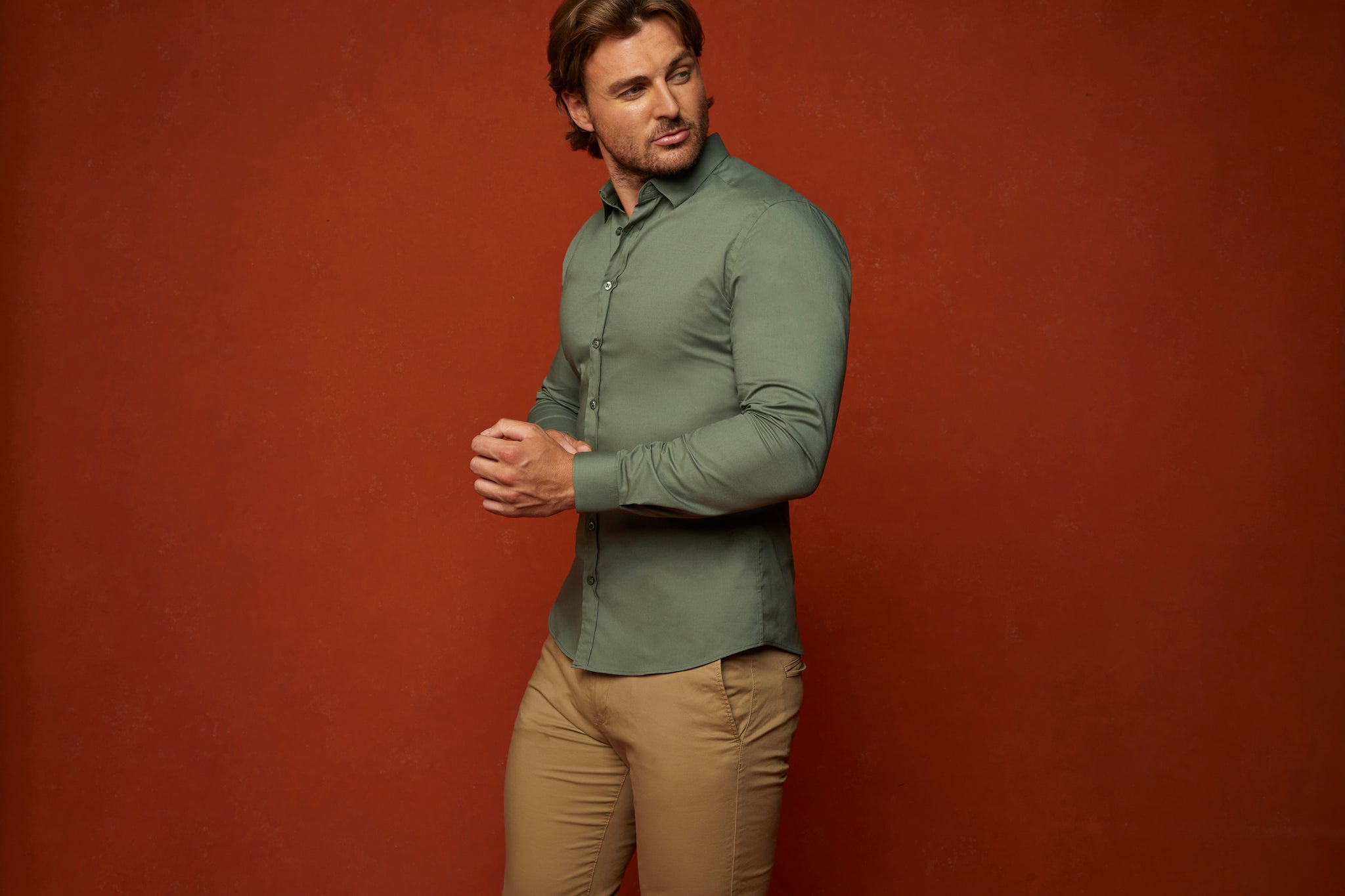
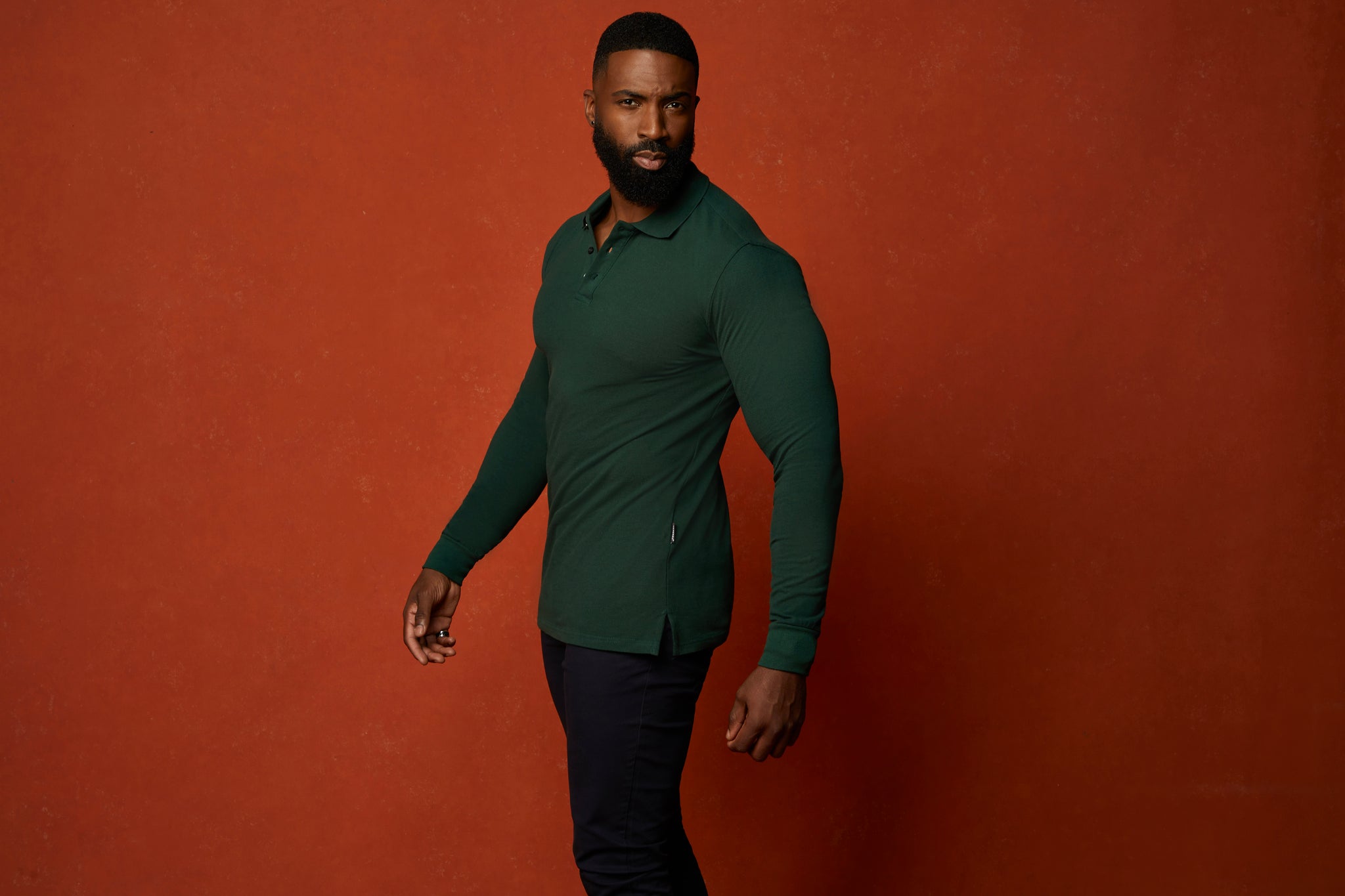
A 1.5 is a clear V-taper. With a 32" waist, that’s 48" shoulders. Your shoulders are half as wide again as your waist, which is a strong look in and out of clothes. It’s also the point where standard shirts stop working. Size for your chest and shoulders, and the waist billows when you tuck it in. That’s the exact build our 10" drop is cut for.
1.6 shoulder to waist ratio
A 1.6 is at the golden ratio (1.618), the Adonis Index target. With a 32" waist, that’s 51.2" shoulders. Very few men reach it, and it usually takes years of consistent training with a lean waist. At this point, holding your waist where it is matters more than adding size. A standard slim fit won’t come close to fitting this shape off the rack.
1.7 shoulder to waist ratio
A 1.7 is beyond the golden ratio. With a 32" waist, that’s 54.4" shoulders. You’ll mostly see this in physique competitors and very lean, heavily trained lifters. If you’re getting 1.7 and that doesn’t describe you, re-measure. Flexing or a tape sitting high on the shoulders often adds 0.05 to 0.1. Shirts at this ratio need the biggest drop you can find, so size by your chest.
1.9 shoulder to waist ratio
A 1.9 is extreme. With a 32" waist, that’s 60.8" shoulders, a stage-level bodybuilder shape. For almost everyone, a 1.9 result means a measuring error. Usually the shoulder tape is too high or loose, or the waist was pulled in. Measure both again, relaxed, with the tape level, and average two readings.
Shoulder to waist ratio vs chest to waist drop
Your shoulder ratio tells you how your physique looks. Your chest to waist drop tells you how clothes will fit it. Most slim fit shirts are cut with about a 6 inch drop from chest to waist. If your body has an 8, 9 or 10 inch drop, you size for your chest and the waist balloons. That’s why the calculator above checks both.
It’s the exact problem Tapered was built to fix. Our shirts are cut with a 10 inch drop and 2.5 inch back darts (standard is 1.5 inch), so they follow a V-shaped build off the rack without being spray-on tight.
How to measure shoulder to waist ratio accurately
- Use a soft fabric tape. No tape? Use a piece of string and measure it against a ruler.
- Measure on bare skin or a thin t-shirt, never over a jumper or shirt.
- Stand relaxed in front of a mirror so you can check the tape is level all the way round.
- Shoulders: widest point across the outer delts, arms down. Waist: at the navel, normal breath out.
- Measure twice and average. Re-measure in the morning, before food and training, for consistent tracking.
Common mistakes: flexing your lats or puffing your chest, sucking your stomach in, letting the tape dip at the back, and measuring after a pump or a big meal. Any of these can swing your ratio by 0.05 or more.
How to improve your shoulder to waist ratio
There are two levers and the calculator shows you exactly how much each one is worth for your numbers. Build the shoulders: side delts and upper back (lateral raises, overhead press, wide grip pull-ups and rows) add width. Bring the waist in: a modest calorie deficit drops waist fat, and for most people this moves the ratio faster than adding muscle. Your bone structure sets the starting point, so compare yourself with your last measurement, not with someone else’s.

What is a good shoulder to waist ratio for men?
Anything from 1.35 upwards shows a visible taper. 1.45 to 1.59 is a strong V shape, and 1.618 is the golden ratio target. Most men start between 1.20 and 1.35.
Is shoulder width the same as shoulder circumference?
No. Shoulder width is measured across your back from one shoulder point to the other. This calculator uses circumference, measured all the way round the outside of your delts, which is the standard for the Adonis Index.
Is a high shoulder to waist ratio healthy?
Not necessarily. It’s an aesthetic measure. Waist-to-height ratio is the better health marker, which is why the calculator checks it if you add your height.

