




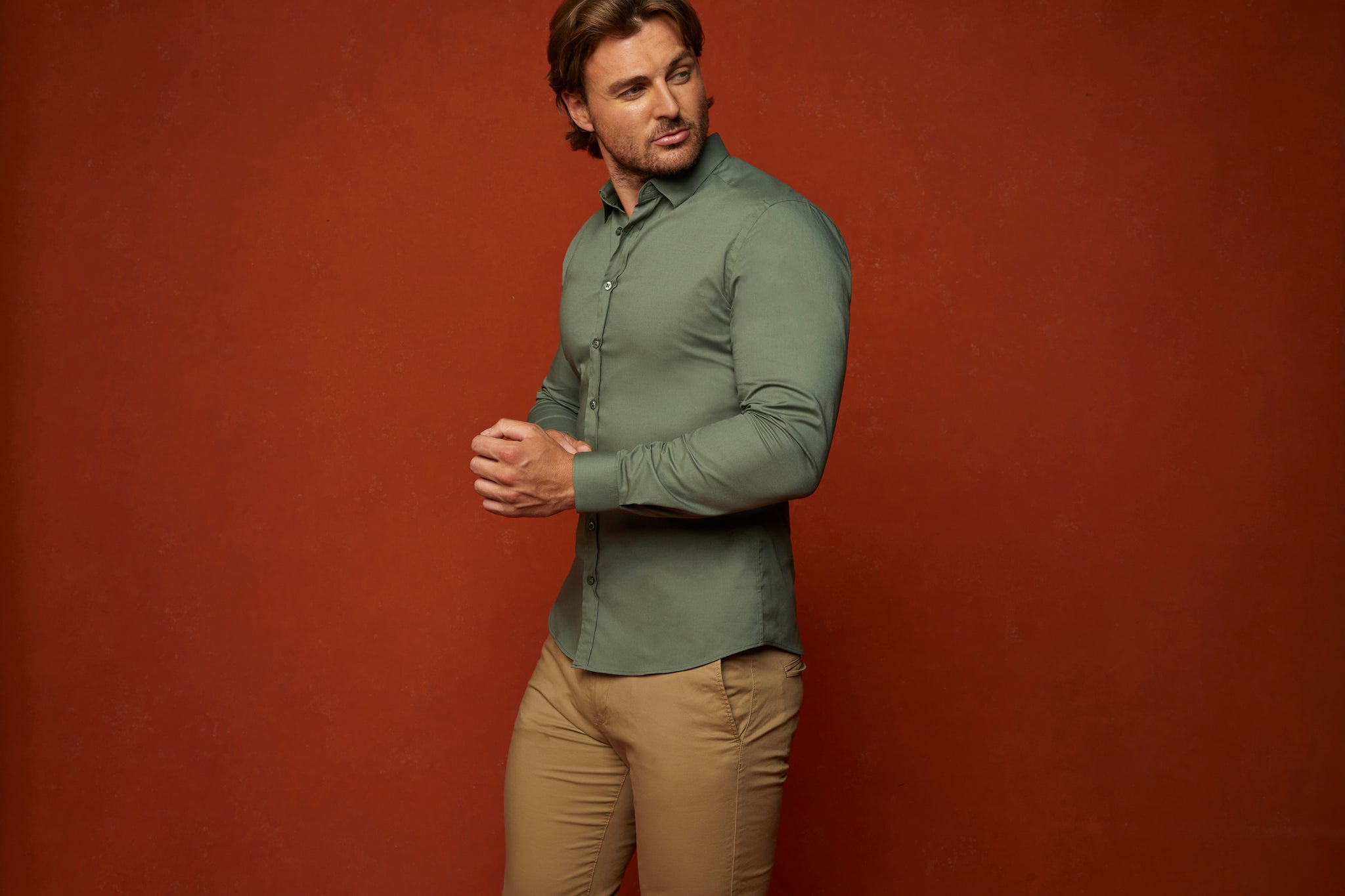
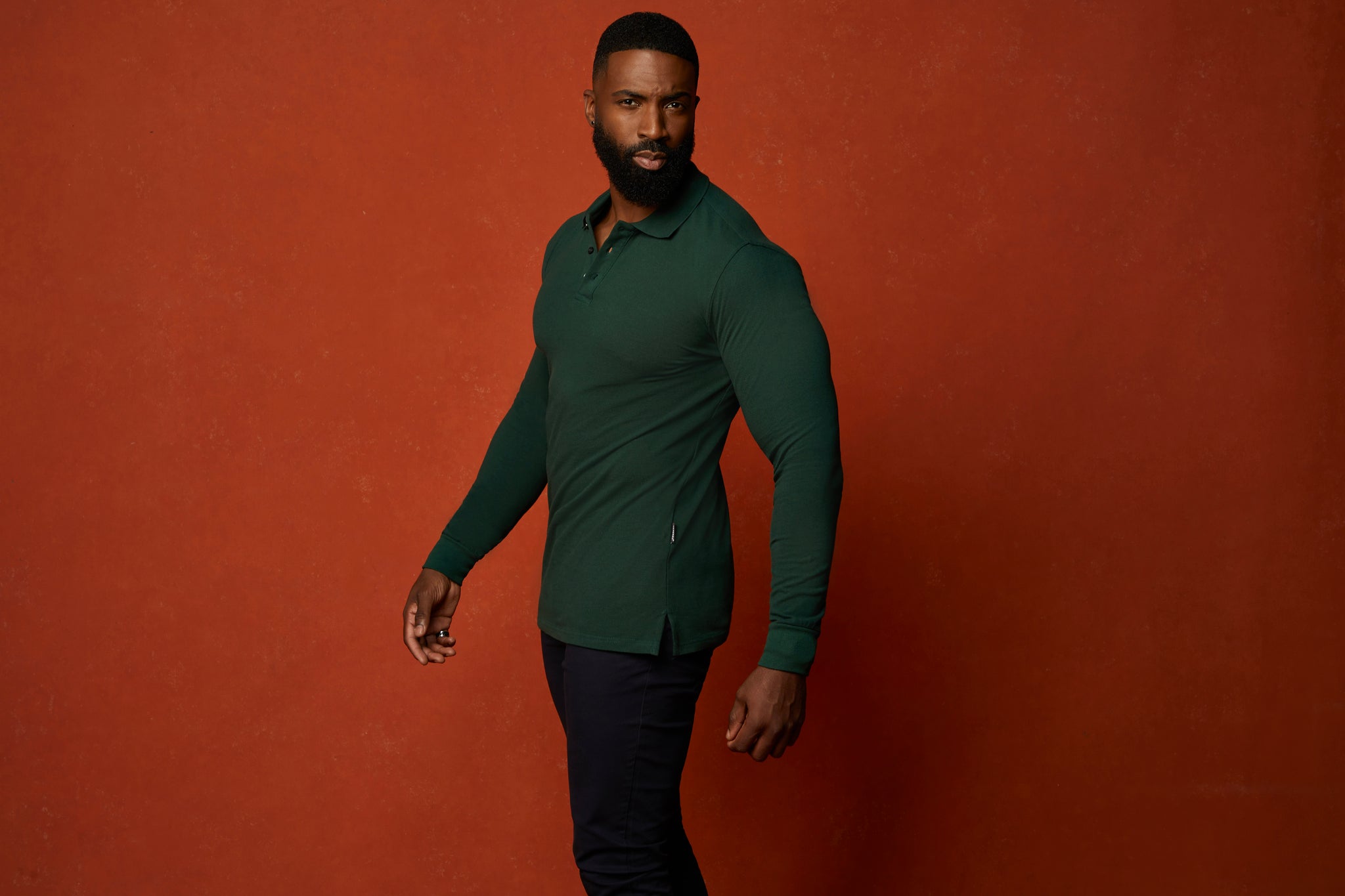
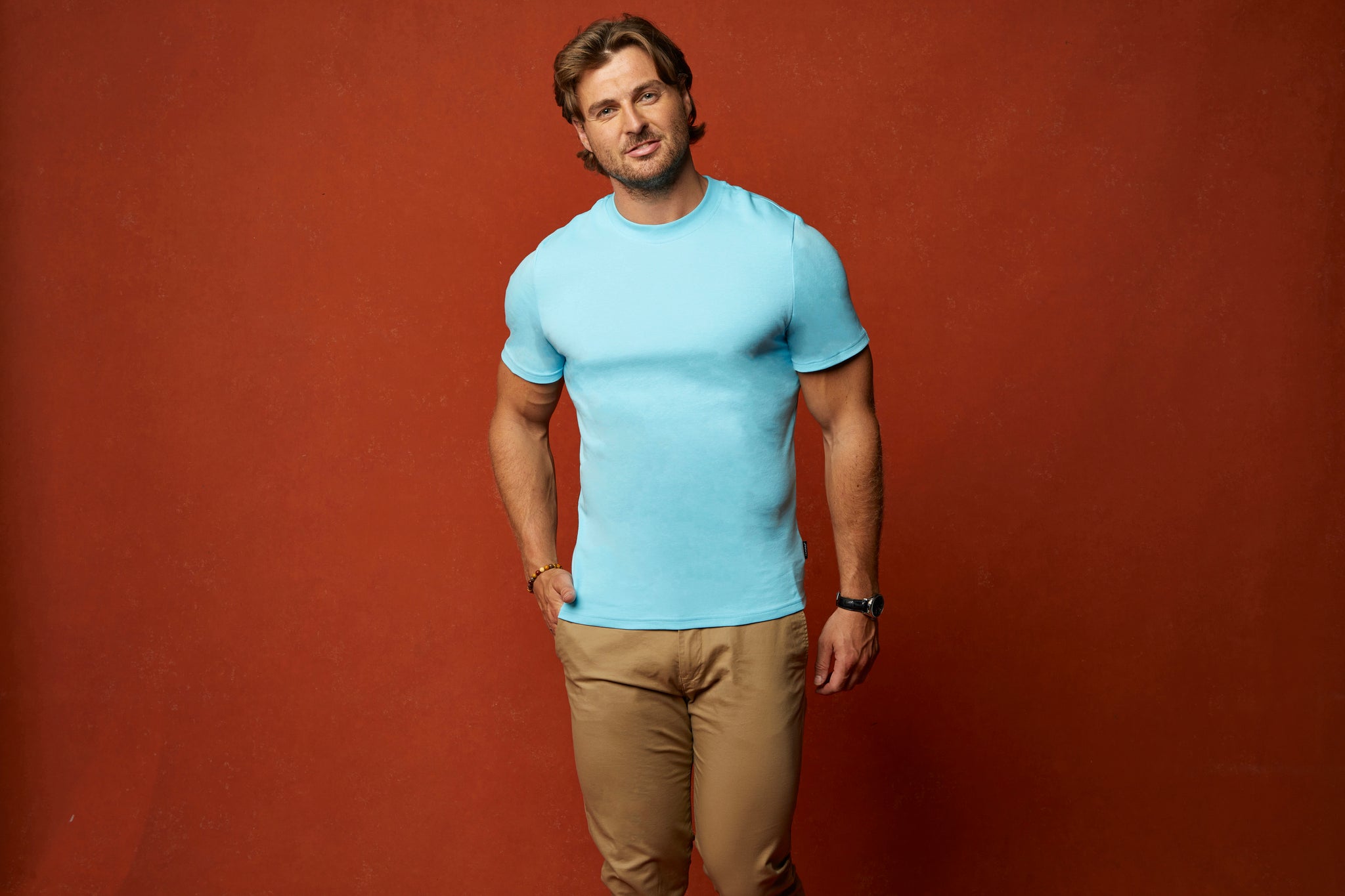

Most men choose a shirt by colour and fit, then wonder why it feels wrong in December. The cloth is what makes the difference. Here are the four weaves that carry a smart-casual winter, how to tell them apart, and when to wear each one.
Why the weave matters more than the colour
Two blue shirts can look the same on a hanger and behave nothing alike once you put them on. The difference is in how the yarns are woven together, and that sets how formal the shirt looks, how warm it feels and how it copes with a long day.
The shirtmaker Proper Cloth lays out a clear formality ladder in its fabric guide. Smooth broadcloth and twill sit at the top, pinpoint sits in the middle, and oxford sits at the casual end. Flannel and chambray are casual cloths by nature.
In summer, a lightweight poplin does most of the work. In winter, the textured cloths come into their own. These are the four worth owning.

1. Oxford: the one that works with everything
Oxford is a basketweave. Real Men Real Style describes the warp and weft threads crossing in pairs, which is what gives the cloth its slightly nubby surface. TM Lewin calls it thicker than poplin and more relaxed in feel.
It also has a good back story. Brooks Brothers says John E. Brooks saw English polo players fastening their collar points down in 1896, and the company dates its button-down collar to 1900. Derek Guy at Die, Workwear! notes that the first versions came in a sturdy twill before oxford cloth took over.
How to wear it: a light blue oxford button-down goes under a crew-neck jumper, a navy blazer or a waxed jacket. The button-down collar stays in place without a tie, which is why it suits smart casual so well.
2. Twill: the smartest of the four
Twill is woven so the yarns form a diagonal line across the cloth. TM Lewin describes a diagonal rib that gives durability and structure, and Proper Cloth notes that twill irons more easily and resists creasing better than broadcloth.
Herringbone is a twill too. Real Men Real Style explains that the diagonal changes direction at regular intervals, which creates the zigzag pattern. TM Lewin rates herringbone as a good winter choice.
How to wear it: twill is your office and dinner shirt. It sits neatly under a jacket and looks crisp with a tie, but it still has enough texture to wear open-necked with chinos.
3. Flannel: the warm one
Flannel is defined more by its finish than by a single weave. Proper Cloth says most flannel shirts are brushed twill or brushed poplin. Brushing lifts fine fibres to form a soft nap on the surface, which is why the cloth feels warm against the skin.
Proper Cloth calls flannel decidedly casual, and that is the right way to treat it. Derek Guy suggests keeping a small stack in steady colours such as blue, green and tan and admits that very traditional patterns such as buffalo plaid tended to go unworn in his own wardrobe.
How to wear it: over a white T-shirt with jeans at the weekend, or under a chore coat or quilted jacket. Leave it out of the office unless the dress code is very relaxed.
4. Chambray: the denim look without the weight
Chambray is a plain weave. Charles Tyrwhitt explains that it pairs a dyed warp yarn, usually blue, with a white filling yarn, which gives the faded look people often mistake for denim. Denim itself is a twill, and Proper Cloth notes that denim shirts are usually lighter and softer than jeans.
How to wear it: chambray is casual, so pair it with grey or navy knitwear and brown boots. It works under a navy jumper with stone chinos as an easy Friday outfit.
Tapered's take
This is our view, not a rule. If you are building a winter shirt rotation from scratch, start with two light blue oxfords, add one twill for the office and one flannel for the weekend. Chambray can come later. That covers most weeks from work to the pub without much thought.
Check the cloth before the price tag. A shirt description that names the weave tells you far more than one that only says cotton.
If you train, cloth weight matters for fit as well as warmth. A firm oxford or twill holds a clean line across the chest and shoulders, while a soft, heavy flannel can add bulk, so size it for movement and keep the body neat at the waist. Whatever your build, the right weave does half the work before you even think about colour.


