




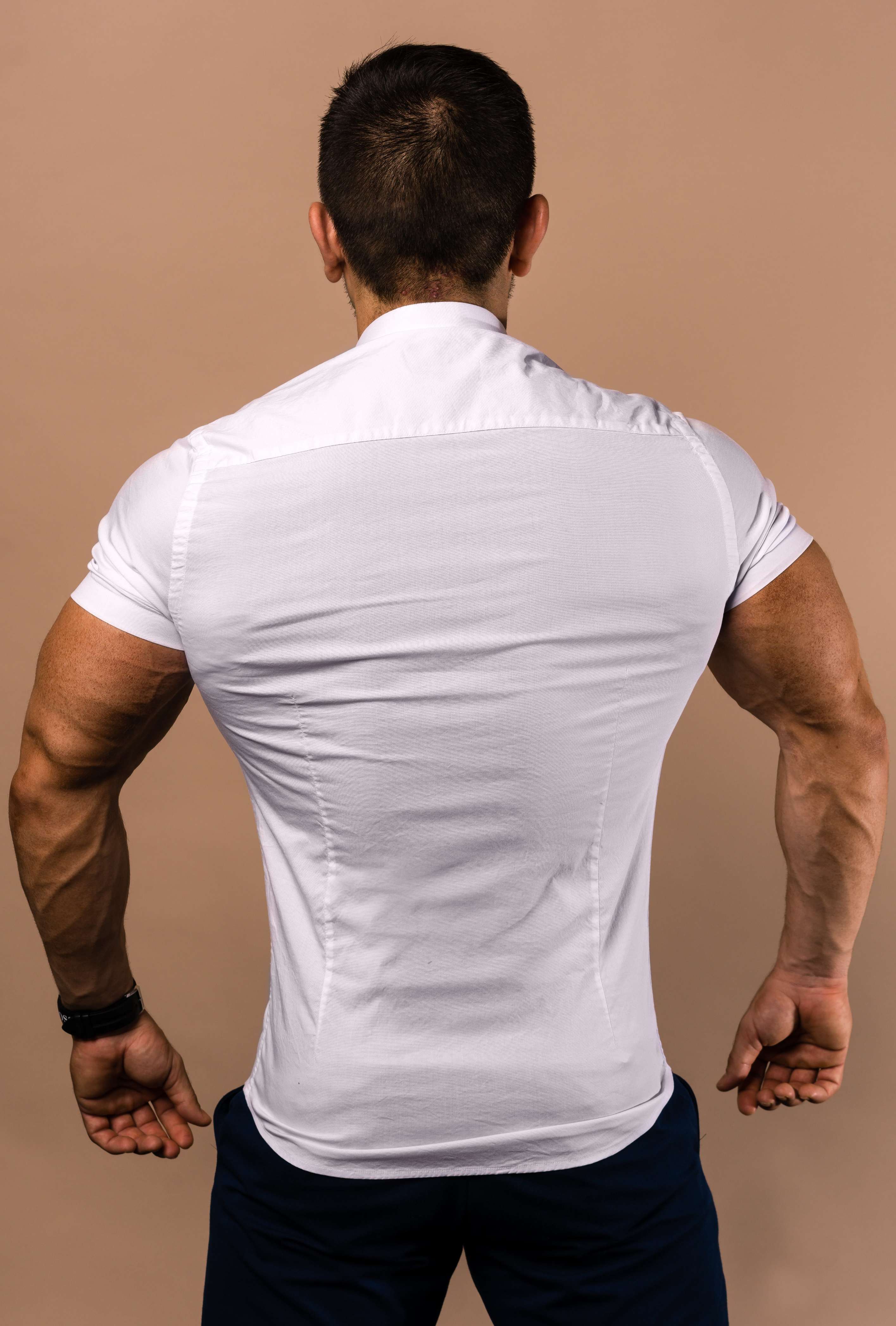
What is a V Taper?
First, let's start with what is a V taper? In the bodybuilding world, image is paramount. When admiring the muscular build the stereotypical indicator of a great physique is wide back and shoulders with a narrow waist.
That shape distinguishes the ultimate physique from the shapeless crowd and is one of the most sought after attributes for all athletes. This shape is coined the V Taper.
Why? Well you can visualise what it is. The V shape in bodybuilding refers to the shape of the torso resembling the letter V, with broad shoulders and lats down to a narrow waist.
What Is a Good V Taper Ratio?
The V-taper ratio compares the width or circumference of your shoulders with your waist, helping describe how pronounced your upper-body shape appears.
A commonly discussed aesthetic proportion is a shoulder-to-waist ratio of approximately 1.6, although this isn't a scientific requirement or a universal ideal.
For example, someone with a shoulder circumference of 120 cm and a waist circumference of 75 cm would have a ratio of 1.6.
However, measurements must be taken consistently, and shoulder width shouldn't be confused with shoulder circumference.
Your height, skeletal structure and muscle development also influence how your proportions appear.
Rather than chasing an exact number, focus on developing a balanced physique that suits your natural frame.
V Taper Body
One of the first goals of new bodybuilders is to get that head turning V taper. This shape is heavily dependent on proportions. If you have narrow hips it’s a lot easier to show a V as this makes your shoulders look broader than if you have wide hips.
Some are blessed with genetics while others have to grind to get anywhere near that shape.

How Do You Measure Your V Taper?
Measuring your shoulder-to-waist ratio can help you monitor changes in your physique over time.
Start by measuring around the widest part of your shoulders and upper body with a flexible measuring tape.
Keep your arms relaxed and avoid deliberately flaring your lats or flexing your shoulders.
Next, measure your waist at a consistent point, such as around your navel, without pulling your stomach in.
Divide your shoulder circumference by your waist circumference to calculate your ratio.
For example, 120 cm divided by 80 cm gives a shoulder-to-waist ratio of 1.5.
Repeat your measurements under similar conditions to track changes more reliably.
Remember that this ratio is only one way of describing body proportions and doesn't measure overall fitness or health.
How Do I Get a V Taper?
There are two ways to get a V taper body. Building the key muscles for the V taper and the right nutrition. In this blog we will discuss both and how to show your V Taper once you’ve earned it.

Feeding your muscles the right nutrition is the key to attaining the best V Taper physique, it keeps the abs tight and the delts full.
If you're fortunate enough to have low body fat, the male body has a natural V taper. If you are overweight the main focus is to diet to get that V taper to show.
Articles cite that you need to get down to 15% body fat to show your V taper but really, if you have significantly larger (1.618 times to be exact) shoulders you have a v taper.
This number is referred to as the golden ratio and this is deemed as the ideal proportion. But if you have a high level of body fat it is even more difficult to achieve.
If you are serious about building your best V taper and having control of your diet, it is essential you learn how to count calories correctly. While the process may seem very simple, there are a number of common mistakes that dieters make.
You need to find your maintenance calories first. This is the number of calories you need to consume on a daily basis to maintain your current weight.
click here for the best v-taper workout
If you are looking to build size you need to be a calories surplus, but if you are looking to lose weight you need to be in a calorie deficit.
Here is a handy calculator that will help you calculate the estimated amount of calories you need to consume for deficit and maintenance.
Remember - you need to decide whether it’s more important for you to build muscle or lose weight in order to develop your V taper.
Once you have decided your goal and calculated the amount of calories required to achieve that goal, it’s time to focus on maintaining a balance diet for a v shaped body while monitoring your calorie target.
V Taper Muscles

If you are slim with narrow shoulders it’s more of an uphill battle, you’ve gotta gain muscle. This is a long process, you have to train hard and train consistent. But you have to focus on the muscles involved in building that V shape.
The two main muscle groups to focus on are the lats and shoulders. In clothing if you want to show your V then shoulders should be your main focus.
There are a ton of good shoulder workouts to try, focus on keeping your routines fresh, keep changing it up so you don’t get bored.
Building a tapered torso begins with building the lats, and if you aren't blessed with a narrow waistline then a wide back is essential.
click here for the best v-taper workout
Best Exercises for Building a V Taper
Developing your lats and shoulders can help create the appearance of a broader upper body.
| Exercise | Main Muscles Targeted |
|---|---|
| Pull-ups | Lats and upper back |
| Lat pulldowns | Lats |
| Seated cable rows | Back muscles |
| Dumbbell lateral raises | Side deltoids |
| Overhead shoulder press | Deltoids and triceps |
| Reverse flyes | Rear deltoids |
| Face pulls | Rear shoulders and upper back |
For balanced development, combine vertical pulling movements with rowing exercises and direct shoulder work.
You don't need to perform every exercise in a single workout.
Choose movements that suit your experience, use controlled technique and gradually increase the training challenge as your strength improves.
Lats (Back Muscles)
Training the Lats
A wide back is essential when building a v shaped back. Everyone from the the beginner just starting to workout, to the strongman, or physique competitor, is striving to build wider and bigger lats.

click here for the best v-taper workout
There are two distinct ways to go about developing good lats and an impressive back.
Focus on two main movements when building thickness:
1. Pull down movements. With this focus on pull up or lat pull down. But keep the motion wide.
2. Rowing movements. Again wide grip focus to really hit the lats.
Shoulders and Traps
Training the delts
A distinct feature of a powerful V shape is impressive, round shoulders. It helps to be blessed with a genetically wide shape but if you aren’t so lucky then developing round, thick delts is imperative.
To maximise development, its important to hit all three heads of the deltoid:
- Anterior head: The front part.
- Medial head: The side part.
- Posterior head: This is the rear part.
Check out expert guidance from Athlean-X below:
How Often Should You Train for a V Taper?
For most people, training the back and shoulders around twice per week can provide a practical starting point for muscle development.
Spreading your training across multiple sessions allows you to practise the movements regularly while managing fatigue.
A balanced routine should include vertical pulls, horizontal rows, shoulder presses and lateral raises.
Aim to progress gradually by improving your technique, increasing repetitions or adding resistance when appropriate.
Recovery matters too, so allow sufficient time between demanding sessions for the same muscle groups.
You should also continue training your legs and other muscle groups rather than focusing exclusively on your upper body.
Abs/Lower Back (Core)
A chiseled set of v taper abs is universally admired. Whether at a bodybuilding contest or at the beach, the most eye catching aspect of a good physique is the sharp midsection.
Not only does ripped and tight v taper abs create a good first impression but also demonstrates a good level of fitness.
Approach to ab training varies wildly. With results also varying from people only benefitting from a good healthy diet and not training abs at all or a moderate diet combined with training intensely.
click here for the best v-taper workout
Here is a quick ab workout you can try at home:
It is a common conception that training the abs with weights can increase the girth of the waist. This can result in a bigger waist a defeat the purpose of attaining that V-shape you are training to achieve.

This is also known for direct training for the obliques. Which is a mistake if you are aspiring to achieve a small a waist as possible.
Any development of the waist size through training detracts from the shoulder to waist ratio.
There isn’t a need for any direct training for the obliques as with any pressing, squatting and ab work will indirectly stimulate the obliques. On this basis - avoid hitting the obliques!
Does Training Your Obliques Ruin Your V Taper?
Training your obliques doesn't automatically make your waist excessively wide or ruin your V-taper.
Your obliques contribute to core stability, rotation and control during everyday movement and resistance training.
Like other muscles, they can grow in response to progressive resistance training, but the amount of growth varies between individuals.
For most people, sensible core training is unlikely to dramatically change their shoulder-to-waist proportions.
Exercises such as side planks, controlled rotational movements and anti-rotation presses can help develop a strong, functional core.
Rather than avoiding your obliques completely, focus on balanced training that supports your overall physique and performance.
How Long Does it Take to Get a V-Taper?
This is a difficult question to answer but if you follow a solid programme and diet you can achieve this in as little as 3 months.
But it takes commitment. As long as you stay consistent to your diet and workout you can sculpt a V-Taper physique in under 12 months.
How Do You Maintain a V Taper?
Once you've developed your shoulders and back, maintaining your physique generally requires continued resistance training and consistent nutrition.
You may not need the same training volume used during a dedicated muscle-building phase, but regular exercise remains important.
Keep challenging your back and shoulders sufficiently to maintain strength and muscle mass.
Eating enough protein and maintaining an appropriate overall energy intake can also support your training goals.
Body weight changes may alter how pronounced your V-taper appears, even if your shoulder measurements remain relatively stable.
Focus on sustainable habits rather than trying to maintain an exact waist measurement throughout the year.
Are V-Tapers Genetic?
A V-taper physique is influenced heavily by genetics. Which some are blessed with and some unfortunately have to work for their physique.
If you don't have the genetics for a V-Taper you can still work at it following the right diet and workout programme, you just have to work harder for it!

How to Dress for a V Taper Body
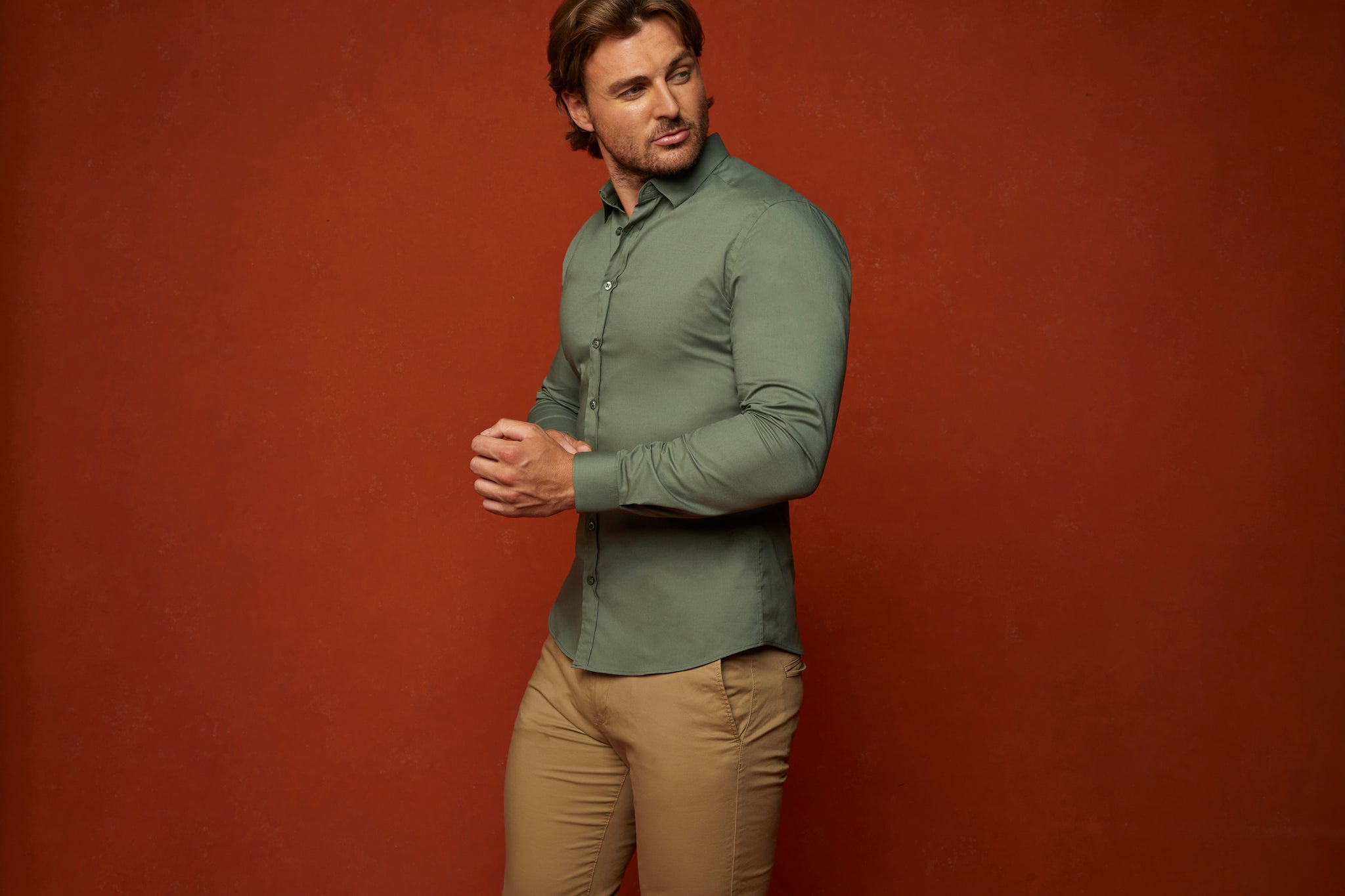
Having broad shoulders and a narrow waist can make finding properly fitted clothing surprisingly difficult.
Traditional regular-fit shirts often leave excessive fabric around the stomach, while slim-fit shirts can feel restrictive across the chest and shoulders.
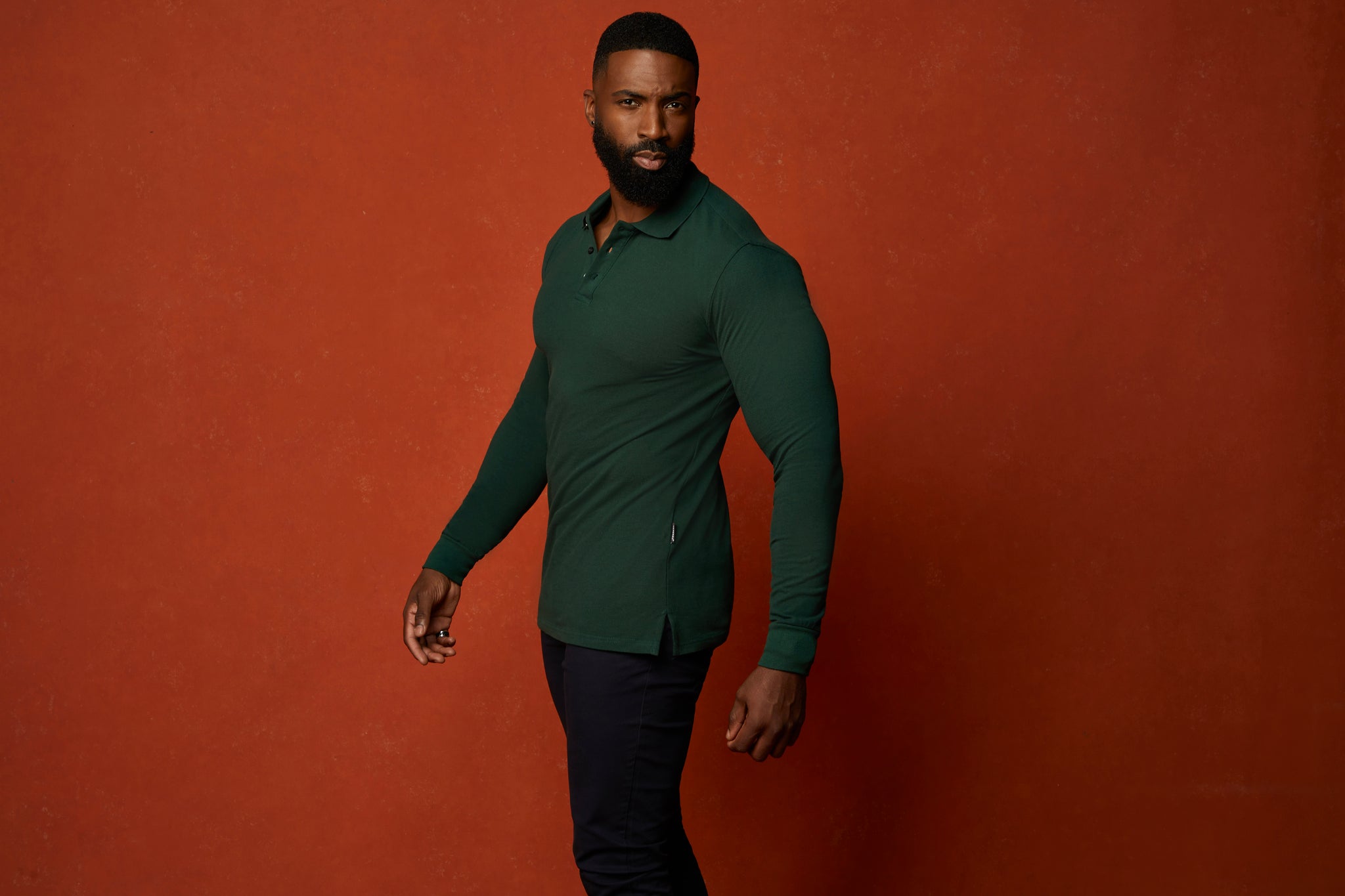
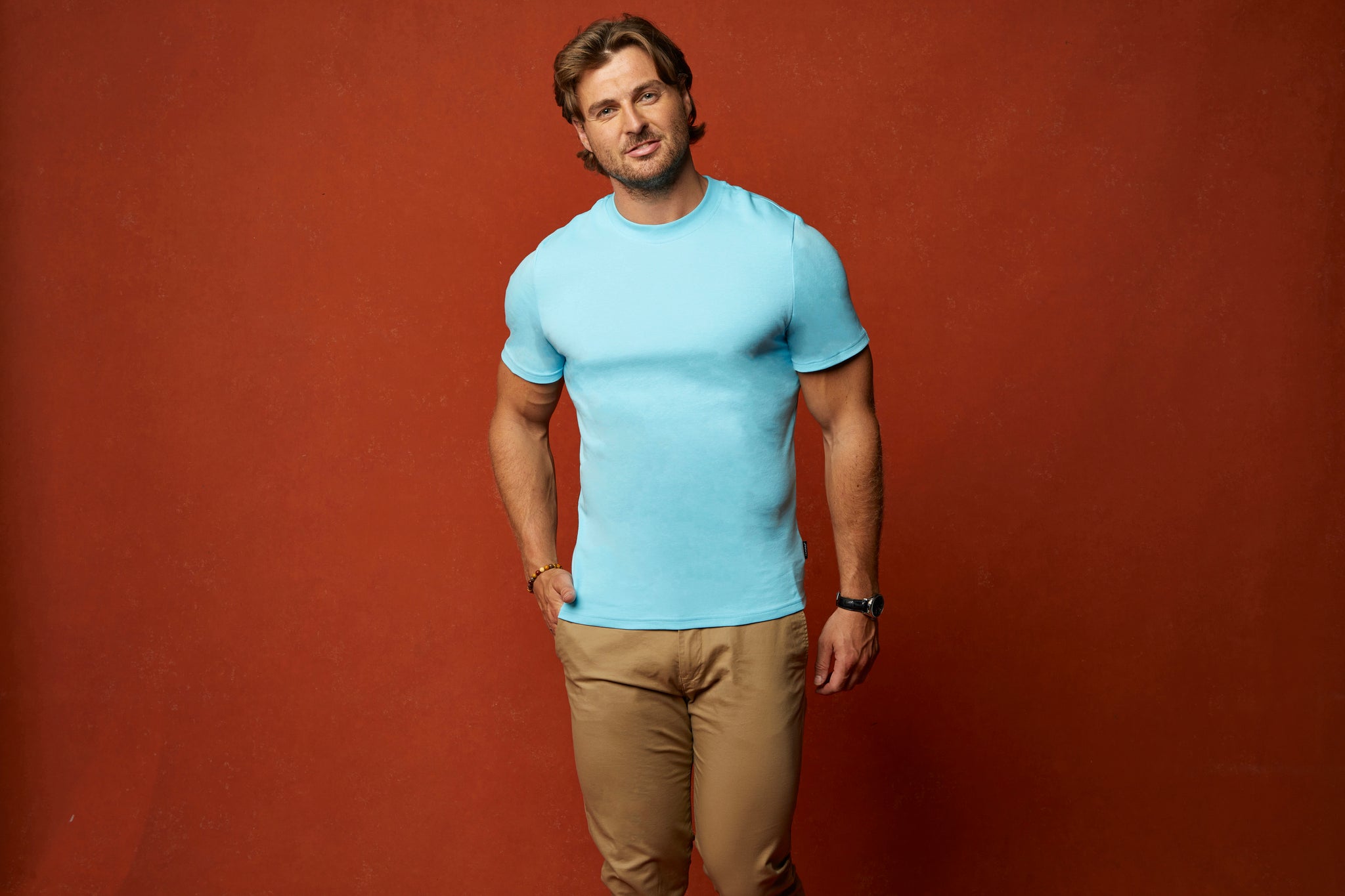
A tapered fit addresses these proportions by providing room through the upper body while narrowing towards the waist.
For dress shirts, look for a defined shoulder fit, comfortable chest measurements and minimal excess material around the midsection.
T-shirts and polos should follow the natural shape of your torso without feeling overly tight.
At Tapered Menswear, our shirts are designed around a 10-inch chest-to-waist drop, helping men with broader shoulders achieve a tailored appearance without additional alterations.
The right clothing won't change your physique, but it can complement the proportions you've developed through training.
V Taper Workout PDF
click here for the best v-taper workout
So there you have it. The key to a great V-taper consists of 3 upper body components:
Wide lats, broad shoulders and a small waist. These combined with a lean physique and a killer set of abs and you can achieve that head turning v-taper withfocussed work.
This 6 week v taper workout PDF, progressive booster workout specifically designed to burn fat and form the foundations you need for an incredible V-Shape.
Following this programme you’ll benefit from enhanced muscle growth due to the increased volume and intensity over a short period.
The author of this Programme is International Fitness Model Eddie Chipp. Eddie is a PCA Muscle Model World Champion.
You might like...


