





Figuring out how to measure chest size doesn't have to be a complex undertaking.
Whether you're gearing up to tailor a custom suit or simply aiming to update your wardrobe with well-fitted clothing, the first step always involves taking accurate chest size measurements.
At Tapered Menswear, we've honed various chest size measuring techniques that ensure a perfect fit.
So how do you measure your chest size? To measure your chest size, wrap a flexible tape measure around the fullest part of your chest. Do this under your armpits and across your shoulder blades. Make sure the tape is level and firm, but not tight.
Let me guide you through how to your measure chest size to achieve accurate measurements every time. Not only that, I'll show you the best fitting shirts for guys with a larger chest.

Chest Circumference vs Chest Width
One of the most important things to understand when measuring your chest is the difference between chest circumference and chest width.
Chest circumference is the measurement around the fullest part of your chest, while chest width usually refers to the distance across the front of a garment when laid flat.
For example, a shirt measuring 55 cm across the chest has an approximate garment circumference of 110 cm, assuming the front and back measurements are similar.
However, this doesn't mean it's designed for someone with a 110 cm chest, as clothing needs additional room for comfort and movement.
When shopping online, always check whether the size chart displays body measurements or actual garment dimensions.
This distinction is particularly important when buying fitted shirts, where a small difference can significantly affect how the fabric sits across your chest.
Where Should Men Measure Chest?
When calculating chest size, make sure you position yourself correctly, because understanding precisely where to measure is crucial. It's commonly recommended to measure at the broadest part to account for the fullest chest area.
This typically means you need to extend the measuring tape across your shoulder blades, under your armpits and place it over your nipples—the points that tend to protrude the most on a man's torso.
Accounting for unique body features is important. For those who may have a more prominent belly, it's essential to separate chest measurements from waist or belly measurements.
Your focus should strictly be on the horizontal span around the chest at nipple level. This practice ensures that shirts and jackets fit comfortably without being too tight around any specific area, which can lead to a more flattering silhouette.
Where to Measure Chest:

Can You Measure Your Chest Size by Yourself?
Yes, you can measure your chest without assistance, although having someone help can make the process easier.
Stand naturally in front of a mirror with your arms relaxed at your sides.
Wrap a flexible measuring tape around the fullest part of your chest, passing underneath your armpits and across your upper back.
Use the mirror to check that the tape remains level rather than dipping or twisting behind you.
Breathe normally and take the measurement without deliberately expanding your chest or pulling your stomach in.
Repeat the process two or three times to check that your measurements are consistent.
If you get different results, use a relaxed measurement taken with the tape sitting comfortably against your body.
How To Measure Chest Size For Mens Shirt
To get that perfect fit, understanding how to properly measure my chest size is the first step.
Before reaching for the measuring tape, make sure the tape lays flat and evenly beneath your armpits, and span across the peak of my chest, typically across the nipples.
When measuring, its best to do this topless or with a thin t-shirt. A thick undershirt will add unnecessary bulk and give you inaccurate measurements.
How Can I Measure My Chest Size Without Measuring Tape?
In instances when a measuring tape isn't on hand, I've learned a few chest measurement guide tricks to still achieve a close and reliable figure.
For an easy way to measure chest size, take a length of string, a phone charger, or even a shoelace will do.
I wrap it around my chest following the same path a measuring tape would. It's important to keep the string snug but not tight.
Once the starting end meets the rest of the string at full circumference, I carefully mark the spot with my finger or a piece of tape. This is your chest circumference measurement.
Now, for the next step in this chest size measurement tip, I lay the string flat against a ruler or any stiff measuring device to read the length. This distance represents my chest size. It's a simple technique without traditional tools.
Remember, while this method provides a good estimate, particularly when determining shirt sizes, it may not be as precise as using a flexible tape.

How to Measure Chest Size on a Shirt
If you already own a shirt that fits well, measuring it can help you find a similar fit when buying new clothing.
Lay the shirt flat on a table, fasten the buttons and smooth out any wrinkles without stretching the fabric.
Measure straight across the chest from one underarm seam to the other.
This measurement is commonly called the pit-to-pit measurement and represents the garment's flat chest width.
For example, if your shirt measures 54 cm from pit to pit, its approximate chest circumference is 108 cm.
Compare this figure with the garment measurements provided by the retailer, rather than assuming it matches your body chest circumference.
Remember that different fabrics and cuts can feel different even when their measurements are similar.
What Is Considered A Big Chest For A Man?
Before discussing what constitutes a "big" chest for a man, it's essential to consider the variance in body types and individual build.
Chest size often employs broad categories such as small, medium, large, and extra-large.
For instance, a 36-inch chest circumference might be branded as a small size. On the flip side, when a mens chest measurement soars above 46 inches, it falls into the extra-large or "big" bracket.
But remember that these categories are simply a reference point and that accurate chest size measurements should be taken using a measuring tape, check my method above on how to do this accurately.

Ultimately, the perception of what makes a chest "big" varies greatly among individuals. What one person may view as a large chest measurements, another may see differently.
Common Mistakes When Measuring Chest Size
Even a small measuring mistake can lead to choosing the wrong shirt size.
One common error is pulling the tape too tightly, which produces a smaller measurement than your actual chest circumference.
Another is measuring too high across the armpits or too low around the ribs instead of the fullest part of your chest.
You should also avoid deliberately flexing your chest muscles or taking an unusually deep breath while measuring.
Thick clothing can add unnecessary bulk, so measuring directly against your body or over a thin T-shirt is generally more accurate.
For consistent results, measure while standing naturally and repeat the process before selecting your size.
How to Measure Chest Length
When measuring chest length, start from the base of your neck, specifically where your collarbone meets your shoulder. Run the tape measure vertically down your chest to the point where you want the shirt to end, typically around the waistline.
This measurement typically isn't overly important but if you are concerned about shirt length it might come in handy. But in general shirt sizes do not consider chest length measurement.
What Chest Size Is 42 Inches?
In my experience, this measurement typically corresponds to a 'Large' on the standard size chart.
But remember each brand is different and relying solely on this number without considering a tailored approach can lead to less than perfect fit.
This is particularly true for brands like us here at Tapered Menswear, where precision in fit underscores our ethos.
My mantra for perfect attire aligns with executing accurate chest size measurements. To do so, I employ reliable chest size measuring techniques that factor in the broadest part of the chest while maintaining a natural posture.
My advice to those standing at the 42-inch mark is to always check the brands size chart. Because one brands large might be another brands XXL.
Check out our very own size calculator to help find your perfect fit.
Is a 42 Inch Chest Medium or Large?
A 42-inch chest is commonly associated with a medium or large shirt, depending on the brand and the fit.
However, there isn't a universal sizing standard that determines which letter size corresponds to a particular chest measurement.
A regular-fit shirt may provide more room around the torso, while a slim or tapered fit will follow the body's proportions more closely.
This means two shirts labelled large can have noticeably different chest and waist measurements.
When choosing a shirt, compare your actual chest circumference with the retailer's recommended body measurements.
If the size chart shows garment measurements instead, remember that the shirt needs enough additional room for comfortable movement.
Average Chest Size For Men
This table presents the average chest size for men across different regions. The measurements are categorised by region, highlighting the typical chest circumference in inches.
The average chest size varies due to factors like ethnicity, physical activity, and body composition. This concise summary provides a quick reference to understand the differences in average chest sizes among men in the U.S., Europe, and Asia.
| Region | Average Chest Size (inches) |
|---|---|
| U.S. | 40-42 |
| Europe | 38-40 |
| Asia | 35-37 |
Chest Size Measurement Chart
Below is our size chart for our dress shirts here at Tapered Menswear. This gives a good idea on chest width size.
| Size | Chest (in) | Waist (in) | Bicep (in) | Shoulder Width (in) |
| S | 20.1 | 16.3 | 7.1 | 8.3 |
| M | 21.1 | 17.1 | 7.3 | 8.7 |
| L | 22.4 | 18.3 | 7.5 | 9.1 |
| XL | 23.4 | 18.9 | 8.1 | 9.4 |
| XXL | 24.4 | 19.9 | 8.5 | 9.8 |
| 3XL | 25.4 | 20.9 | 8.9 | 10.2 |
| 4XL | 26.4 | 21.9 | 9.3 | 10.6 |
| Size | Chest (cm) | Waist (cm) | Bicep (cm) | Shoulder Width |
| S | 51 | 41.5 | 18 | 21 |
| M | 53.5 | 43.5 | 18.5 | 22 |
| L | 57 | 46.5 | 19 | 23 |
| XL | 59.5 | 48 | 20.5 | 24 |
| XXL | 62 | 50.5 | 21.5 | 25 |
| 3XL | 64.5 | 53 | 22.5 | 26 |
| 4XL | 67 | 55.5 | 23.5 | 27 |
How to Read a Shirt Chest Size Chart
Before choosing your shirt size, it's important to understand whether the measurements refer to your body or the garment itself.
For example, a chest measurement of 59.5 cm on a size chart may represent the flat width of the shirt rather than the circumference of the person wearing it.
If it's a flat garment measurement, doubling that figure gives an approximate garment circumference of 119 cm.
However, that doesn't automatically mean the shirt is suitable for someone with a 119 cm chest.
The correct size depends on the intended fit, fabric stretch and additional room built into the garment.
For the most accurate result, compare your measurements with the brand's sizing instructions and check the waist, shoulders and biceps as well as the chest.
How Much Room Should a Shirt Have Around the Chest?
A properly fitted shirt should follow the shape of your chest without pulling tightly across the buttons or restricting your movement.
The amount of additional room needed depends on the shirt's cut, fabric and intended use.
Traditional dress shirts often have more ease built into the chest, while stretch fabrics can allow a closer fit.
Try reaching forward, sitting down and moving your arms naturally to check whether the shirt remains comfortable.
If the buttons pull apart or horizontal wrinkles form across your chest, the garment may be too tight.
For men with broad shoulders and narrow waists, a tapered fit can provide comfortable chest room without leaving excessive fabric around the stomach.
The goal is a clean, tailored appearance that still allows you to move comfortably throughout the day.
Best Shirts for Guys with a Big Chest
Finding the right shirt can be a challenge for those of us with a larger chest size.
If you have asked yourself "how do I know my chest size" then my goal is to guide you through the process with practical advice that combines proper chest measurement methods and the selection of shirts that cater to a more generous build.
A chest measurement guide can help you determine your correct size, but the real magic happens when you choose shirts that complement your physique.

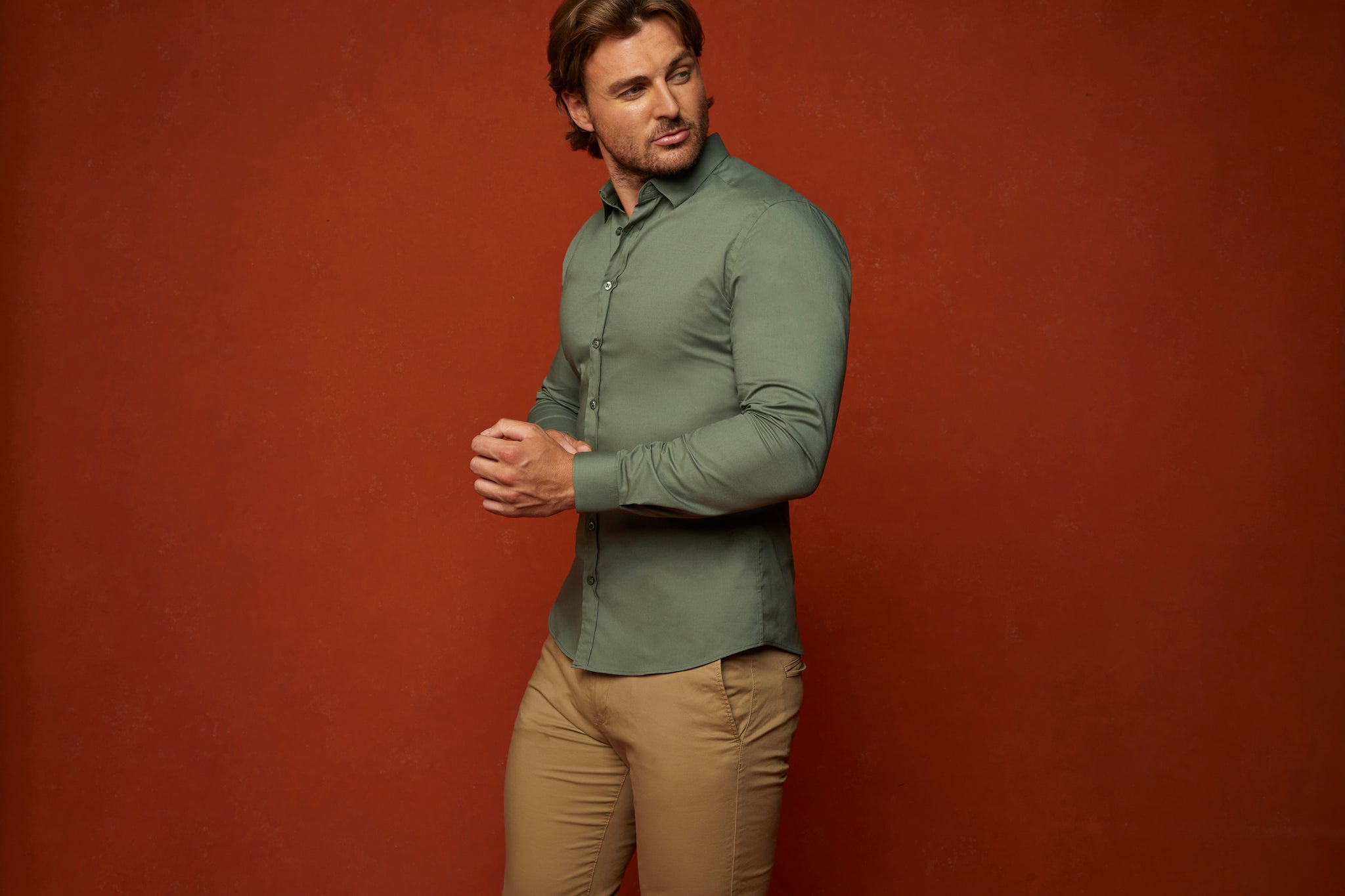
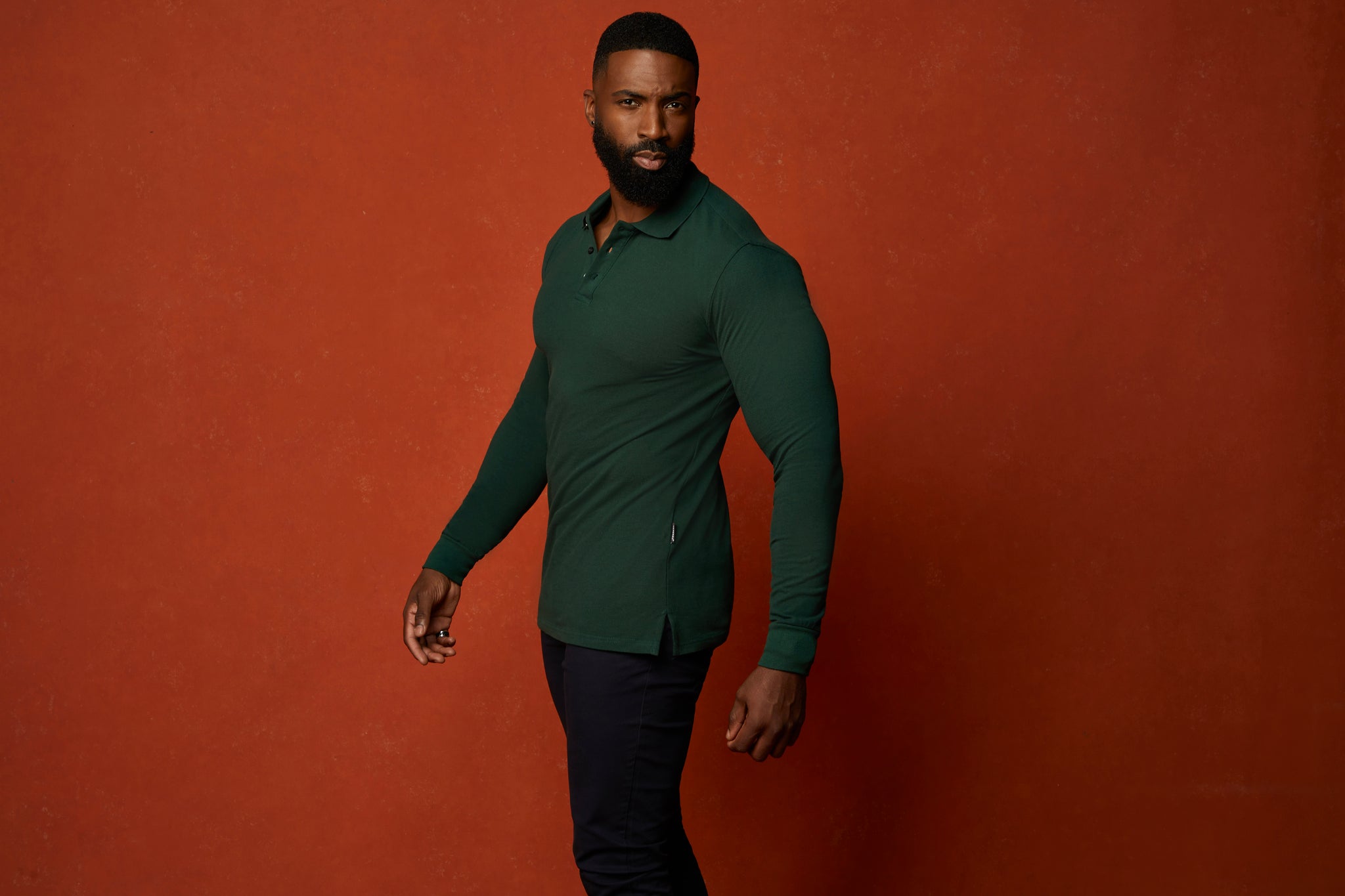
At Tapered Menswear we have mastered this concept, offering shirts with a tapered fit that not only highlight your chest and broad shoulders but also ensure a smooth, flattering look all the way down to your waist.
But the buck doesn't stop at chest size only, look for shirts that integrate stretch materials to give you comfort.
Addressing neck size and sleeve length is also paramount for achieving that bespoke feeling.
In my experience, the best shirts not only fit well but move with you and feel like they were tailored specifically for your body.
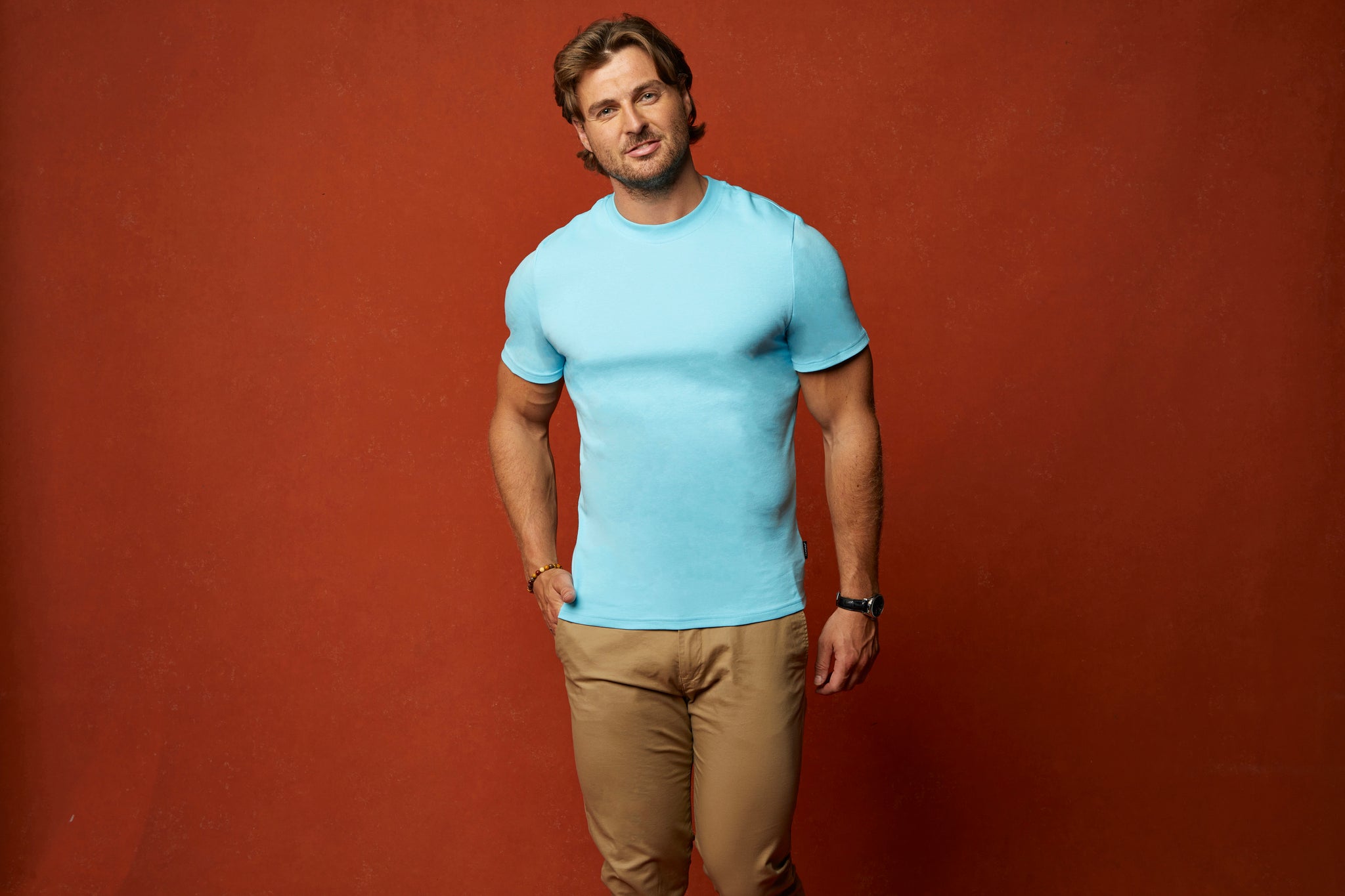
All of our fully fitted shirts are expertly cut close to the body. Arms are closely fitted in the biceps at an optimal length to flatter the bicep peak. While the cut of our shirts also sit snug on the shoulders and chest.
Our v-tapered shape cut equally helps to reduce the amount of material around the midsection to give you your guaranteed dream shape.
Meaning, no more annoying material where you really don’t want it. We believe that we have solved an age-old problem that many men with bigger builds have faced.

Not only that, they’re also completely comfortable. Made from 100% cotton, that moulds effortlessly to your shape, you can work and play in our shirts and expect comfort all day long.
We have also recently added the classic Henley shirt to our range for even more choice. Why not give Tapered Menswear a chance. No more ill-fitting shirts. No more money spent on a tailor.
Available in both long sleeve and short sleeve muscle fit shirts.
Check out Tapered Menswear today and see for yourself.
Our revolutionary cut provides a 10" drop from chest to waist.
Fully fitted in chest and shoulders whilst tapering sharply down, giving a tailored look. No more bagginess in the waist.

Enhanced Darts
Expertly tailored darts at the back, for the perfect fit.

Stretch Cotton
Super soft, breathable and allows complete freedom of movement.


